
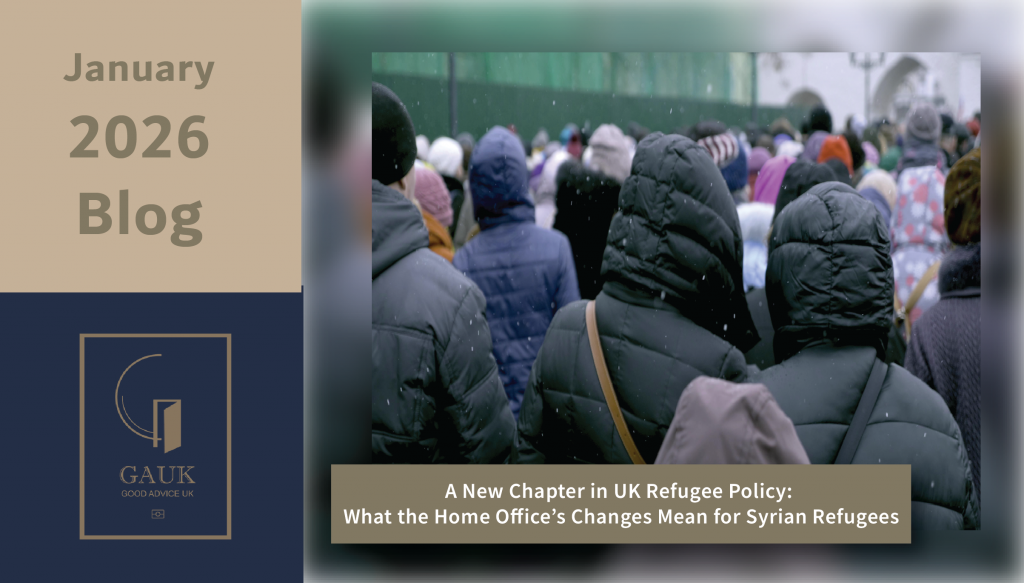
What the Home Office's Changes Mean for Syrian Refugees
A New Chapter in UK Refugee Policy
In 2025, the Home Office took a significant and controversial step by revising how it handles pending settlement protection applications from Syrian refugees who are seeking to remain in the UK permanently. This decision is rooted in a larger shift in the UK’s immigration policy and reflects profound changes in the situation in Syria following the fall of Bashar al-Assad’s regime.
At the heart of the change is the introduction of an enhanced Safe Return Review process, which forms part of the Home Office’s renewed approach to settlement decisions. Under this process, applications that were previously paused are now being reviewed considering updated country guidance and assessments of the risks Syrian refugees would face if they were to return.
Policy Shift: From Pause to Review
Late in 2024, following the collapse of the Assad regime, the Home Office announced that it was pausing all Syrian asylum interviews, decisions, and settlement protection applications. This included cases for those who had completed the required five-year period on a protection route and were applying for indefinite leave to remain (ILR). The rationale was that there was no “stable, objective information” with which to accurately determine the level of risk that return to Syria would pose.
For many refugees, this pause meant that their applications were left in limbo for over seven months, facing uncertainty around employment, housing stability, and family life in the UK.
By July 2025, the Home Office had published updated Country Policy and Information Notes and resumed processing Syrian asylum claims and settlement protection reviews. These updated materials are intended to provide a more current evidential basis for decision-making, forming the backdrop for the Safe Return Review process. For many, it represents recognition of lawful presence, integration, and long-term commitment to the UK.
How the Safe Return Review Works
Under the recent policy, settlement protective review is a formal part of considering whether a person who has received refugee status continues to need protection. This involves assessing whether circumstances in the country of origin, Syria have changed to such an extent that the original grounds for protection no longer exist. A Request for Information and Notice of Intention (NOI) letter is issued to applicants, giving them between 14 and 21 days to provide further evidence that their protection needs remain unresolved.
The revised approach places a greater emphasis on whether there have been significant and non-temporary changes in Syria that would negate the need for protection. Recent Home Office country guidance suggests that opponents of the former Assad regime are unlikely, on that basis alone, to face persecution upon return, and that many returnees have not been reported to face systematic mistreatment. However, refugees must demonstrate specific, personal evidence of ongoing risk to meet the threshold for continuing protection.
Implications for Syrian Refugees’ Protection Status
The updated approach has both legal and practical consequences. On one hand, refugees whose original claims were based on broad conflict conditions, general opposition to Assad, or membership of certain minority groups may find it harder to demonstrate that they still face a real risk of serious harm upon return. Their cases may be judged as no longer requiring protection unless they can offer compelling, individualized evidence of ongoing danger.
On the other hand, individuals who have suffered severe past persecution, including detention, torture, sexual violence, or profound psychological trauma, are still strongly protected under the UK’s obligations, both under the Refugee Convention and domestic immigration rules. Home Office guidance and international law establish that where refusal to return is grounded in past persecution, expecting return may be deemed unreasonable.
Practical Guidance for Applicants
Syrian refugees who receive a Request for Information or Notice of Intention (NOI) from the Home Office should respond within the stated deadline. These requests form part of the Home Office’s revised review process and may affect settlement applications or protection status.Until the Immigration Rule are formally changed:
The assessment is fact-specific and considers personal circumstances alongside current country information. Given the potential consequences of the review and the complexity of the issues involved, applicants are advised to seek assistance from a regulated immigration adviser when preparing their response.
Where a refusal or revocation decision is made, individuals may have a right of appeal, subject to the relevant rules and time limits.
Conclusion
The Home Office’s updated approach introduces greater individual scrutiny of Syrian protection and settlement cases. While intended to reflect changing conditions, it has created uncertainty for some refugees.
In this evolving landscape, timely and independent legal advice can assist applicants in understanding their options and navigating the process effectively.
Should you need guidance pertaining to your Individual, Business or Humanitarian UK immigration matter,
To arrange meeting with our lawyers, contact us by telephone at
+44 2077202156 or by email at office@goodadviceuk.com.
If you have instructed us before, we would be pleased to know your feedback about your experience.